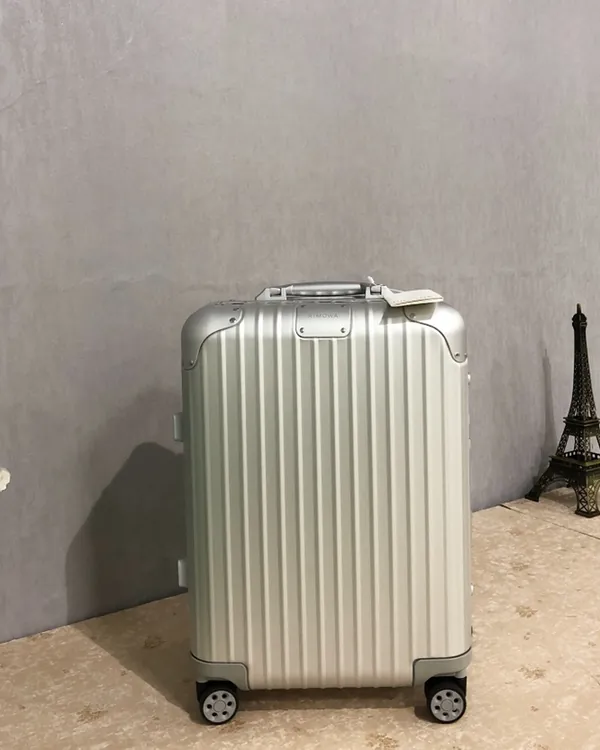
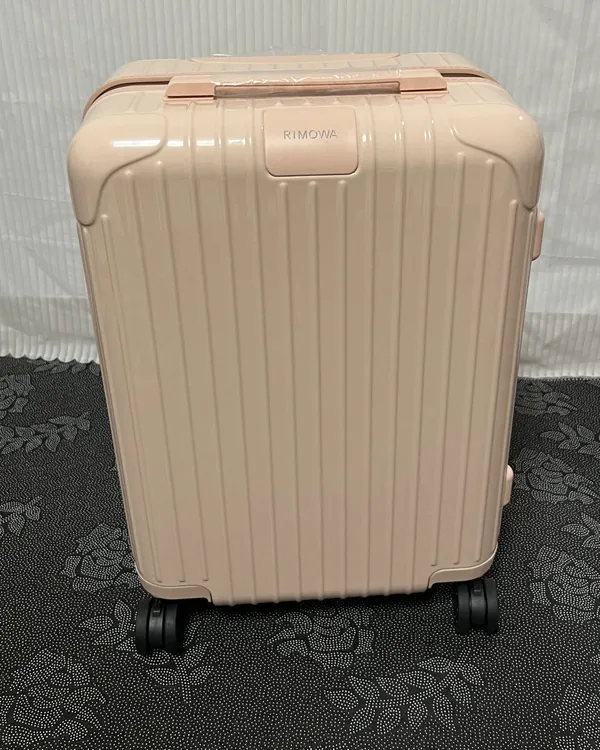
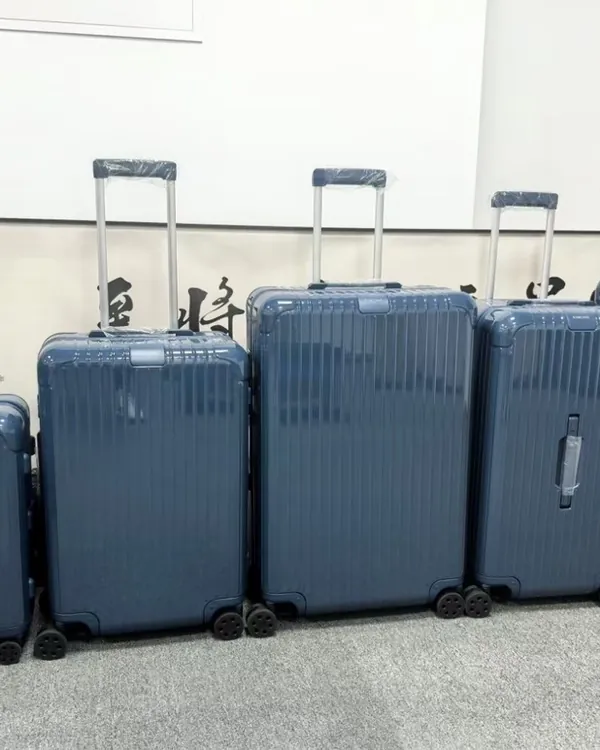
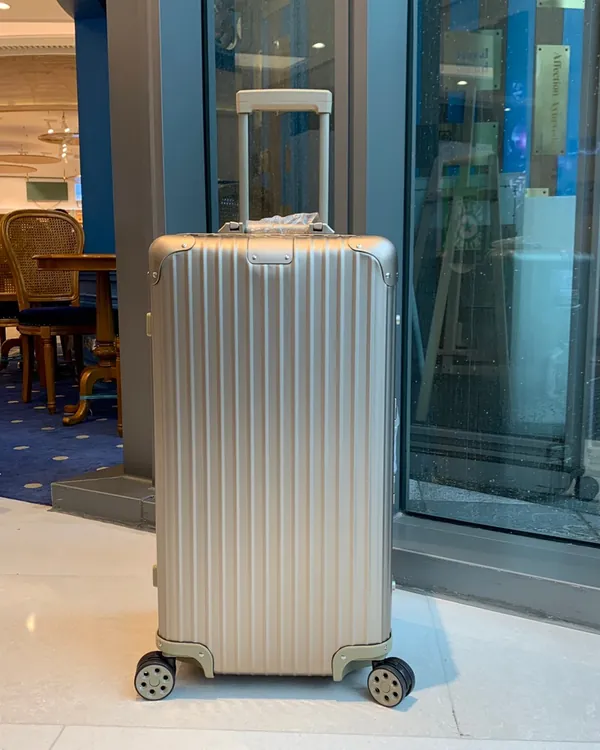
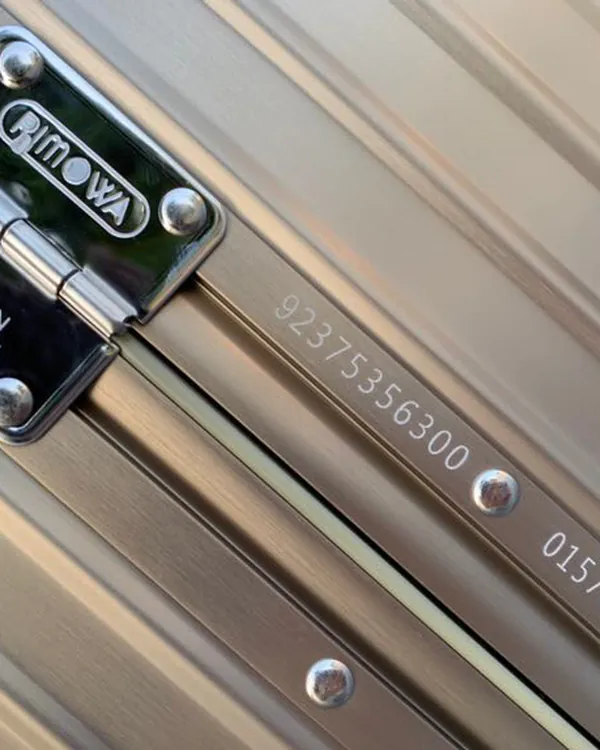
Aluminum-magnesium frame and grooved polycarbonate luggage, built to the published specification of the original — same dimensions, same capacity, same hardware layout. No customisation, so the tenth order is the same product as the first.
A copy gets the silhouette right and the centimetres wrong — half a centimetre off the depth means the case no longer clears the cabin sizer it was designed for. Ours match the published dimensions.
The frame is riveted at fixed pitch with corner caps, the way the original is built. A glued plastic chassis looks identical in a photo and separates in a baggage hold.
We do not take logo engraving or custom colours. That is a deliberate trade: a locked specification is why your second container matches your first, exactly.
We publish the shell material, frame construction, lock type, wheel configuration, capacity and weight, and they follow the original specification rather than a rounded approximation. If a measurement on your sample does not match the number on the product page, that is a defect and we replace it.
Each model is one locked specification, so your second container matches your first — the dimensions do not drift between orders.
Luggage is mostly air. Shipped finished, a case takes its full carton volume. Shipped semi-knocked-down and flat-packed, the same case takes about a third of that — and you assemble at destination.
Shells nest, frames stack, hardware ships in bulk. Freight per unit drops sharply — usually enough to absorb the assembly cost and still come out ahead. Best for smaller volumes and tight margins.
How it works →Full carton volume, full case. No assembly, no local labour, no component handling. Simpler for retail channels and for orders of a full container or more, where freight per unit is already low.
Compare the two →Model, monthly volume, destination country. Two fields matter most — the rest we can ask later. Reply comes on WhatsApp within two business hours.
One number for your model and volume, plus the shipping difference between finished goods and flat-packed. No published list to reverse-engineer.
Stock samples ship by air. Measure it against the published specification yourself before you commit to a container.
15–25 days for typical volumes, starting from deposit receipt. The specification is locked at sample stage — that is what makes the reorder identical.
AQL 2.5 pre-shipment inspection with photos before the balance is due. FOB or DDP, your forwarder or ours.
Locked specification, held repair parts for three years. Your second order is not a new product with a new set of tolerances.
Rivet pitch, groove depth, frame construction, wheel bearing, lock spec and interior layout — the six measurements that separate a 1:1 build from a lookalike.
Read → 2026-11-06 · 9 minUnit economics, damage rates, freight cost and sell-through compared between aluminum frame and polycarbonate luggage.
Read → 2026-10-28 · 8 minHow flat-packed semi-knocked-down luggage cuts container volume by about two thirds, what it costs to assemble at destination, and when finished goods still win.
Read →Prices go out on WhatsApp, not on a web page — a published list would be wrong for almost every buyer. Two business hour reply, GMT+8.